
If you’ve ever walked into your kitchen and felt instantly stressed by the mess on your counters, you’re not alone. Cluttered counters have a way of making even a spacious kitchen feel small, chaotic, and hard to relax in. Between mail, appliances, dishes, and random odds and ends, it’s easy for counters to become a catch-all for everything that doesn’t have a home.
The good news is that you don’t need a full renovation to fix this. A few simple kitchen counter organization ideas can completely change how your kitchen feels — calmer, more functional, and honestly, just prettier to look at. Whether you have a big kitchen or a tiny apartment galley, these tips will help you create organized kitchen counters that actually work for your daily life.
Let’s walk through it step by step.
1. Clear the Counter Before Organizing
Before you can organize anything, you need a clean slate. Start by taking everything off your counters — yes, everything. This sounds intimidating, but it’s the fastest way to see what you’re really working with.
As you go through each item, ask yourself:
- Do I use this every single day?
- Does it need to live here, or could it be stored in a cabinet or drawer?
- Is this something I keep out just because I haven’t found another spot for it?
You’ll probably notice that a lot of what’s been sitting on your counters isn’t actually earning its spot there. Things like extra mail, random chargers, or that blender you use twice a year can easily be tucked away. Only bring back the items you genuinely reach for often.
2. Create Small Zones
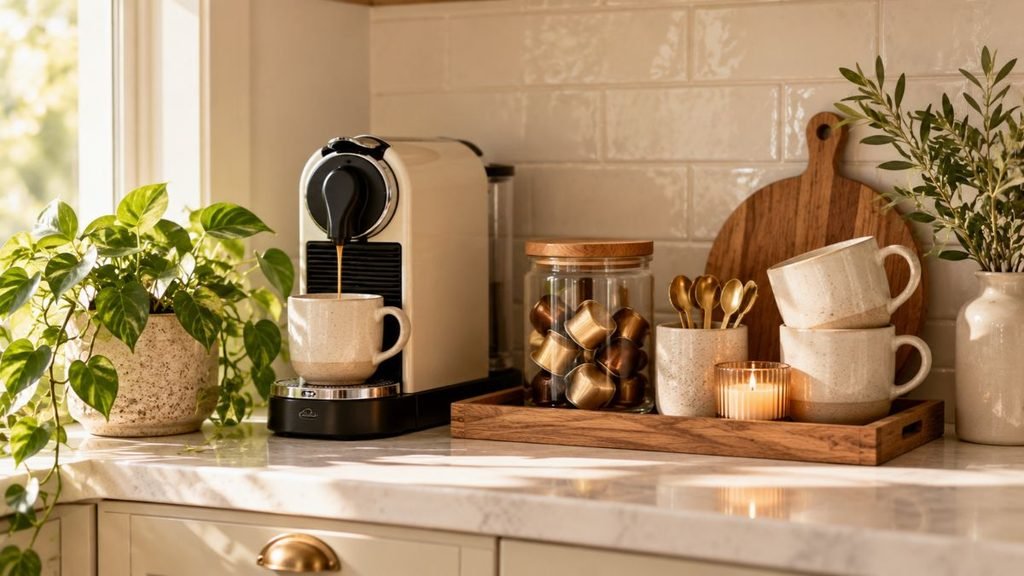
One of the easiest ways to keep kitchen counters organized long-term is to think in zones instead of one big open space. When everything has a designated area, it’s much easier to keep things tidy because you always know where something belongs.
A few zones to consider:
Coffee zone — your coffee maker, mugs, and any daily coffee essentials in one spot.
Cooking zone — near the stove, for oils, utensils, or spices you use while cooking.
Sink zone — soap, sponge, and a small towel, kept simple and contained.
Prep zone — an open stretch of counter left clear for chopping, mixing, and everyday food prep.
You don’t need fancy labels or a Pinterest-perfect layout. Just get in the habit of returning items to their zone after use, and the rest starts to fall into place naturally.
3. Use Trays to Group Everyday Items
Trays are one of the simplest and most effective kitchen counter storage ideas out there. Instead of having loose items scattered across the counter, a tray gives them a visual boundary and makes the whole space feel instantly tidier.
You can use a tray to group things like:
- A soap dispenser and hand lotion
- A few cooking oils
- Salt and pepper with a small spice or two
- A candle with a small decor piece
The trick is to keep it simple. A tray with too many items just becomes another cluttered spot, so aim for 3–5 items per tray at most. Think of it as a “frame” that keeps everyday essentials looking pulled together rather than scattered.
4. Organize the Sink Area
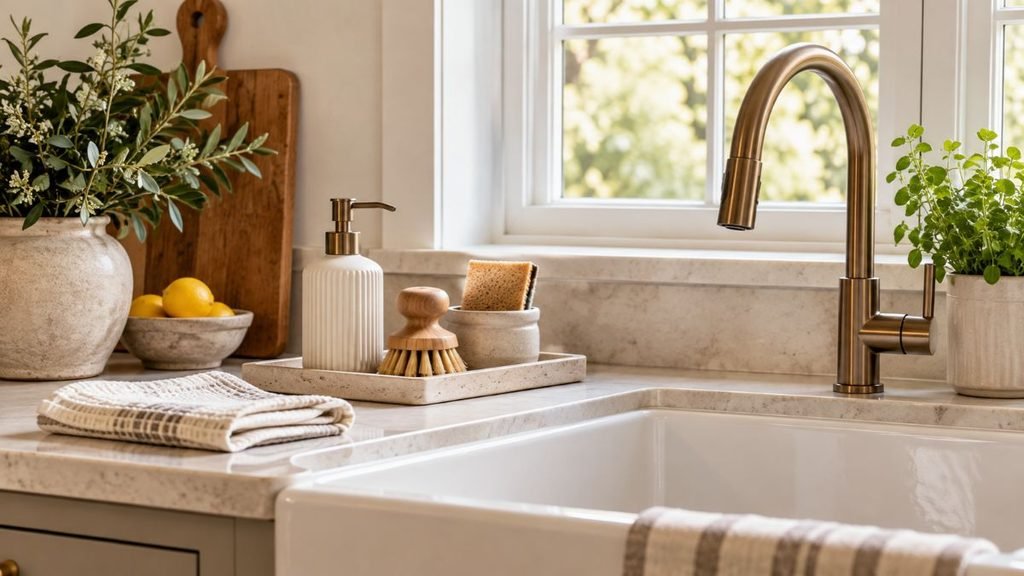
The sink area tends to be one of the messiest parts of the counter because it collects so many small, damp items throughout the day. A little structure here goes a long way.
Try this simple approach:
- Keep one soap dispenser instead of a bottle plus backup bottles
- Store your sponge in a small holder so it can dry properly
- Hang or fold your dish towel neatly instead of leaving it in a pile
- Keep a small brush or scrubber tucked to one side, not sitting in the sink
Keeping this area contained not only looks cleaner, it also just feels more pleasant to do dishes in a space that isn’t visually chaotic.
5. Use Cutting Boards as Functional Decor
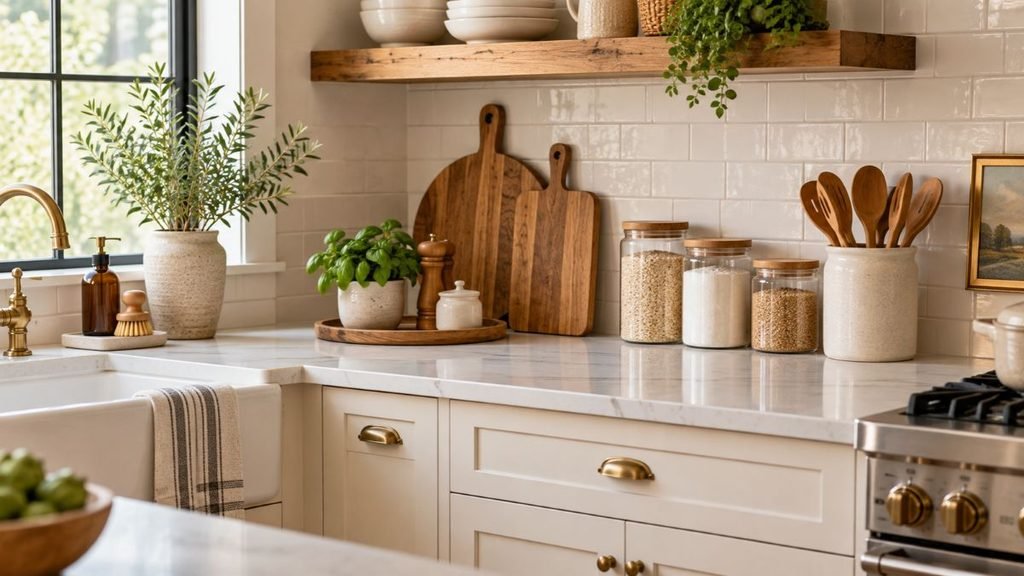
This is one of those small changes that makes a big visual difference. Instead of storing your wood cutting boards flat in a cabinet where they’re hard to reach, try leaning one or two against the backsplash.
It adds warmth and texture to the space, gives your counter a lived-in, cozy feel, and keeps your most-used board within easy reach for quick meal prep. This works especially well near your prep zone, so you’re not digging through a cabinet every time you need to chop something.
6. Store Dry Goods in Matching Containers
If you keep things like flour, sugar, rice, pasta, or coffee out on the counter, storing them in matching containers instantly makes everything look more put-together. Mismatched bags and boxes are one of the biggest culprits behind a cluttered-looking kitchen, even when the counter itself isn’t that full.
You don’t need anything expensive — even a few simple glass or plastic jars in the same style will do the trick. The consistency is what creates that clean, organized look, not the price tag.
7. Make Use of Vertical Space
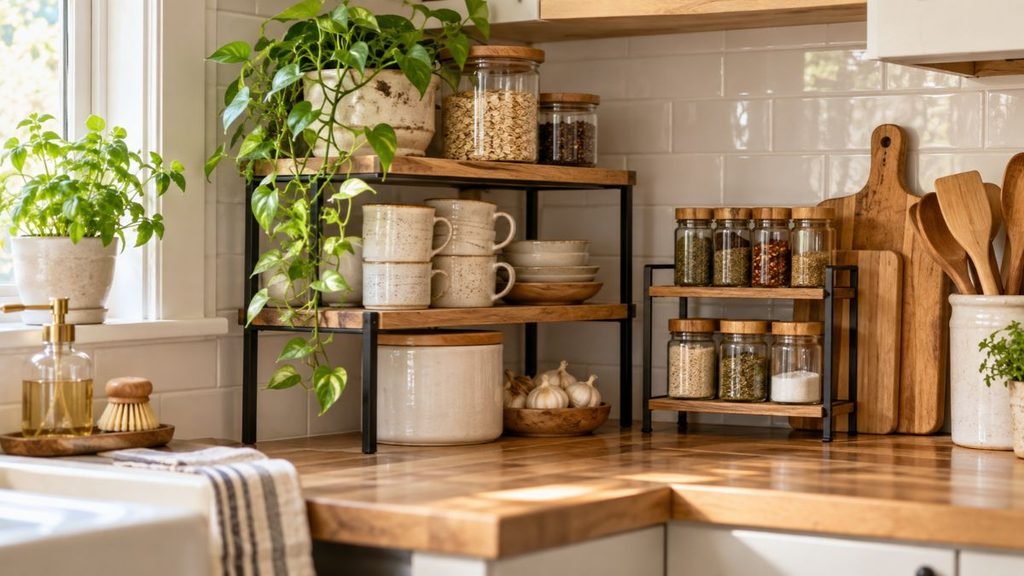
If your counter space is limited, going vertical is one of the smartest small kitchen organization ideas you can use. Instead of spreading items across the counter, stack or layer them upward.
Some easy options include:
- A small riser to lift a coffee maker or appliance, creating storage space underneath
- A mini shelf that sits directly on the counter for spices or mugs
- A tiered stand for fruit, snacks, or small jars
This approach lets you keep more items accessible without eating up precious counter real estate.
8. Limit Small Appliances on the Counter
Small appliances are often the biggest space-hogs on a kitchen counter. The key question to ask is simple: do I use this at least a few times a week?
If the answer is yes, it can probably stay out. If it’s more of an occasional-use item, it’s better off stored in a cabinet or pantry. A good rule of thumb is to keep no more than two or three appliances visible at once. Everything else can be pulled out when needed and put away after.
This one change alone can make a huge difference in how open and breathable your counters feel.
9. Add One or Two Decorative Touches
Once your counters are functional and organized, a little bit of decor helps the space feel warm and finished — just don’t overdo it. The goal is a light, curated touch, not a whole new layer of clutter.
Simple ideas include:
- A small vase with a bit of greenery
- A neutral bowl for fruit or lemons
- A single candle
- A neatly folded kitchen towel
One or two of these is plenty. More than that and you risk undoing all the organizing work you just did.
10. Keep the Counter Easy to Maintain
Organizing your counters is only half the job — keeping them that way is what really matters. A simple reset routine makes this effortless.
Daily: Wipe down counters each evening and put stray items back in their zone.
Weekly: Do a quick check of trays and containers, and clear out anything that’s crept onto the counter that doesn’t belong there.
This small habit takes just a few minutes but keeps your kitchen counter organization from slowly slipping back into chaos.
Kitchen Counter Organization for Small Kitchens
Small kitchens and apartments come with their own unique challenges, but a lot can still be done with limited space.
A few practical tips:
- Choose one multi-use tray instead of several small ones spread across the counter
- Mount a small shelf on the wall to free up counter space for appliances or containers
- Store appliances you don’t use daily in a cabinet, even if it means a bit more effort to pull them out
- Use the corners of your counter, which are often wasted space, for a tiered organizer or riser
- Keep decor to a bare minimum — in a small kitchen, every open inch of counter matters
The goal in a smaller space isn’t to keep everything out — it’s to be intentional about what truly deserves counter space.
Common Kitchen Counter Organization Mistakes
Even with good intentions, a few habits can quietly sabotage your organized counters:
Using too many containers. More containers don’t always mean better organization — sometimes they just add more things to manage.
Overcrowding trays. A tray with too many items loses its purpose and becomes clutter with extra steps.
Keeping every appliance visible. Just because you own it doesn’t mean it needs a permanent spot on the counter.
Adding too much decor. A few thoughtful touches look intentional; too many start to feel busy and cluttered again.
Being mindful of these small habits makes it much easier to keep your kitchen looking clean long-term.
Final Thoughts
You don’t have to overhaul your entire kitchen in one weekend to see a difference. Start with just one section — maybe the sink area or a single tray — and build from there. Small, consistent changes add up to a kitchen that feels calmer, more functional, and genuinely enjoyable to spend time in.
FAQ
What should I keep on my kitchen counter?
Only keep items you use daily or almost daily, like your coffee maker, a soap dispenser, or a cutting board you reach for often. Everything else is usually better stored away.
How do I organize a small kitchen counter?
Focus on vertical space, use one multi-purpose tray instead of several, and be extra selective about which appliances stay visible. Every inch counts in a small kitchen.
How can I make my kitchen counters look less cluttered?
Group items with trays, limit decor to one or two pieces, and store appliances you don’t use regularly. Clear zones also help prevent random items from piling up.
How do I organize kitchen counters without buying new organizers?
Use what you already have — a plate as a tray, a mug for utensils, or a shelf you already own repurposed for the kitchen. Organization is more about habits and placement than new products.