
There’s something about stepping onto a porch dressed for fall that instantly shifts the mood of the whole house. The air feels a little crisper, the light hits a little softer, and a well-styled entryway becomes the first small moment of “home” before you even step through the door.
At Home Nest Glow, our approach to fall decor stays away from anything too costume-y or Halloween-heavy. We lean into a warmer, more grounded palette — think warm brown, cream, burnt orange, and natural green — so the porch feels cozy and lived-in rather than seasonal clutter you have to take down the moment November hits.
This guide walks through how to build that look step by step, from color choices to pumpkin placement, with practical advice you can use whether you’re working with a wide wraparound porch or a narrow apartment entry.
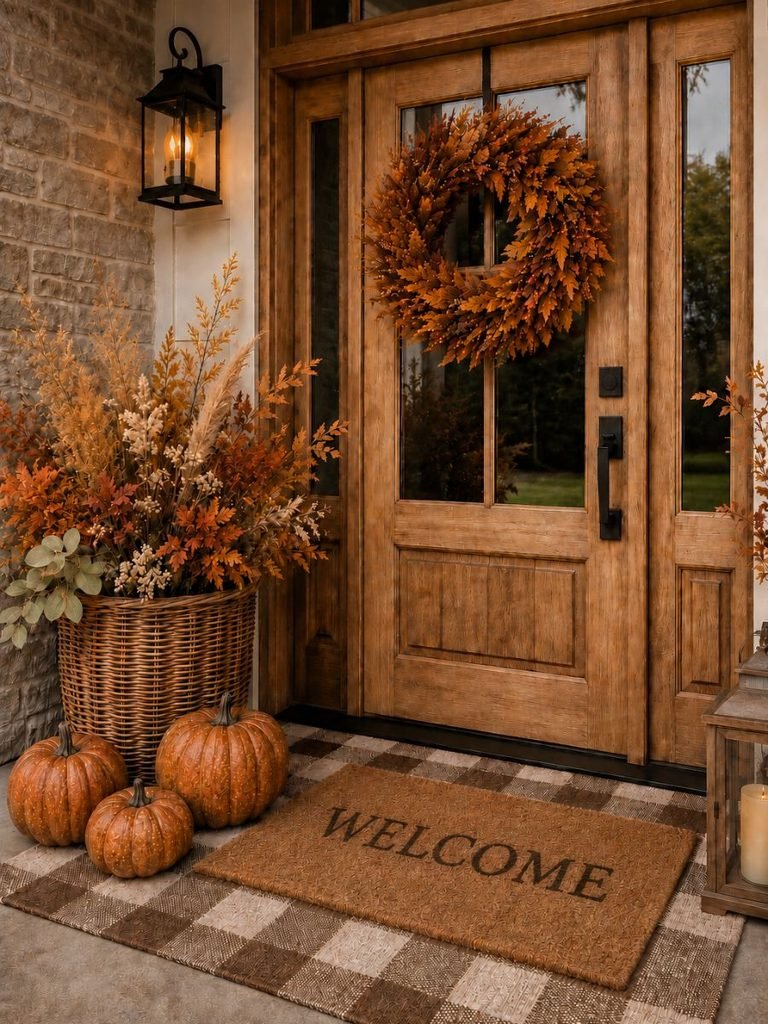
How to Choose a Fall Color Palette
The easiest way to make a porch look pulled-together is to limit your palette before you buy anything. Home Nest Glow’s fall direction centers on four tones that work together in almost any combination:
- Warm brown — for baskets, wood accents, stems, or a wreath base
- Cream — for your doormat, planters, or a neutral base layer
- Burnt orange — the one true “fall” pop of color, used sparingly
- Natural green — from real or faux greenery, which keeps the look from tipping into all-orange, all-Halloween territory
Using all four in small doses, repeated in different spots, reads as far more intentional than picking one color and using it everywhere. A few burnt orange flowers in a planter, a small cluster of orange pumpkins, and a touch of burnt orange worked into your wreath is usually enough — you don’t need it dominating the whole porch.
If your front door is already a strong color, let it guide you rather than compete with it. A cream or warm brown door pairs easily with this whole palette. A bolder door color (navy, black, deep red) still works — just let the door be the standout and keep everything else in the warm brown/cream/green family, with burnt orange as the smallest accent.
Layered Rug and Doormat Styling
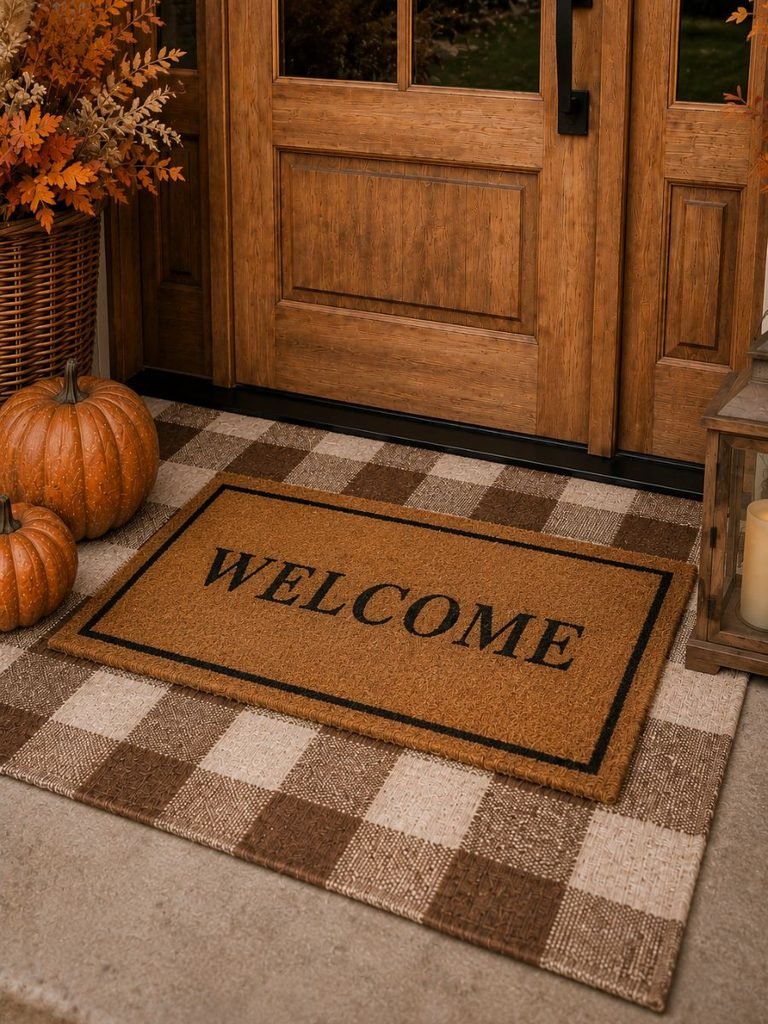
A layered doormat — a larger flat-weave or outdoor rug with a smaller coir mat on top — is one of the simplest upgrades for a fall front porch, and it holds up as a year-round base layer, not just a fall styling trick.
A few things to keep in mind:
- Let both layers show. The bottom rug should extend a few inches past the coir mat on every side. If they’re close in size, the layered effect disappears and it just looks like two separate mats.
- Keep the pattern on the bottom. A patterned or textured flat-weave rug underneath, with a simple or plain-lettered coir mat on top, tends to look cleaner than stacking two busy patterns.
- Confirm outdoor suitability before buying. Not every rug or mat is rated for direct weather exposure. If your porch isn’t covered, look specifically for outdoor-rated materials rather than assuming a rug is safe outside — this matters more for how long it lasts than for how it looks on day one.
This post may contain affiliate links. As an Amazon Associate, I earn from qualifying purchases at no extra cost to you.
A brown and white buffalo check rug creates a warm neutral base and gives the smaller welcome mat enough contrast to stand out.
A natural coir welcome mat adds texture and gives the layered rug setup a simple, finished look without competing with the plaid pattern underneath.
Fall Wreath Styling
The wreath usually sets the tone for the whole porch, so it’s worth thinking through size, placement, and texture rather than grabbing the first one that catches your eye.
Sizing: A wreath that spans roughly a third to half the width of your door tends to look proportionate. Much smaller and it can look like an afterthought; much larger and it can overwhelm a standard door.
Placement: Center the wreath on the door’s window or glass panel if it has one, rather than the full slab — this usually looks more balanced than dead-center on the whole door.
Texture, not just color: For the Home Nest Glow palette, look for wreaths that mix dried grasses, faux wheat, magnolia leaves, or muted greenery with small pops of burnt orange — rather than an all-orange or all-pumpkin wreath, which can tip toward a more Halloween-leaning look.
One honest note: wreath materials and how well they hold up outdoors vary a lot by product, so it’s worth checking the specific material and care details on whatever you choose rather than assuming durability. We won’t make claims here about how long any particular wreath lasts outside, since that depends on your climate, sun exposure, and the materials used.
A burnt orange eucalyptus fall wreath brings in a rich autumn tone without making the entryway feel overly themed.
Seasonal Flowers and Planters
Planters are where the natural green and burnt orange in this palette really get to work together. Mums, ornamental kale, and celosia are common fall choices and come in tones that fit warm, muted color schemes well.
A few styling principles:
- Odd numbers, varied height. A single large planter, or a group of three in different sizes, usually looks more natural than a matched symmetrical pair — though symmetry can work for a more formal entry.
- Layer textures within the planter. Combine something upright (branches or grasses), something full (mums), and something trailing (ivy) for more depth than a single plant type alone.
- Stick to the palette. Choose blooms in cream, burnt orange, and deep green rather than mixing in bright Halloween oranges, purples, or black accents, which shift the whole look in a different direction.
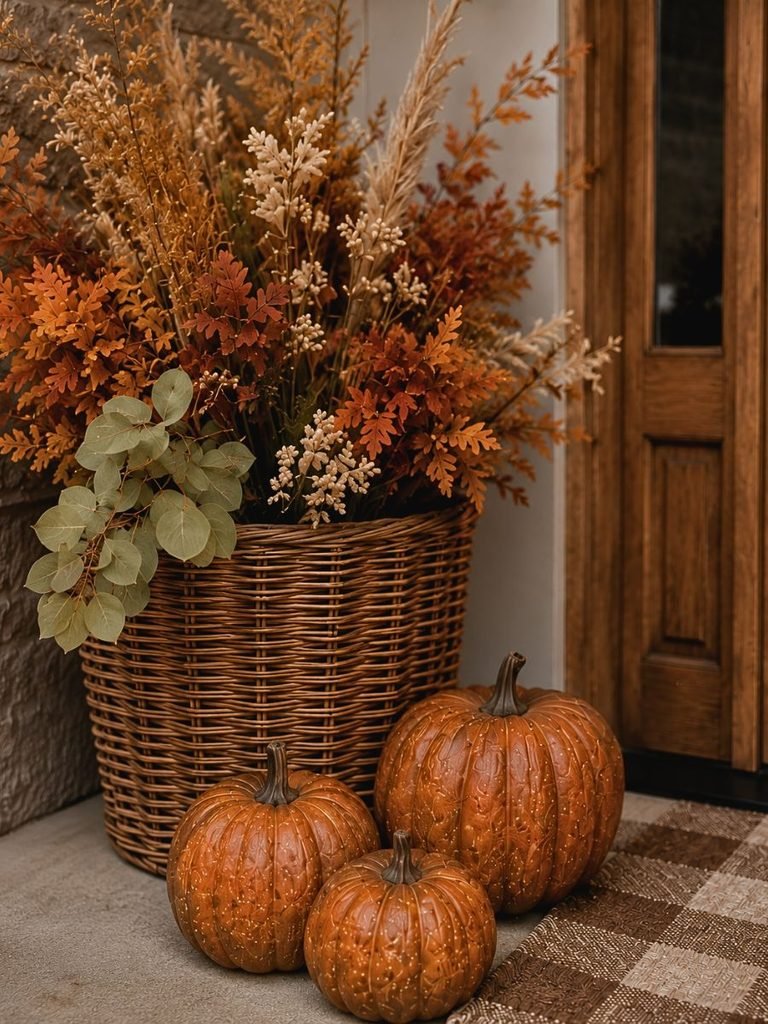
Artificial fall flowers add soft seasonal color and height to the porch without making the arrangement feel too heavy or crowded.
A woven seagrass basket brings in warm natural texture and gives the flowers a relaxed, layered look that fits the cozy fall palette.
Faux stems are a practical option if your porch doesn’t get consistent light or you’re often traveling — just know that quality varies quite a bit between products, so it’s worth reading the material description rather than judging by photos alone.
Pumpkin Placement and Styling
Pumpkins are usually the first thing people reach for, and also the easiest to overdo. A few placed thoughtfully will always look more finished than a dozen scattered everywhere.
- Group in odd numbers. Clusters of three or five, in varying sizes, look more natural than a straight row.
- Mix within the palette. Pair traditional orange pumpkins with cream, white, or muted heirloom varieties instead of bright orange alone — it keeps things closer to “cozy fall” than “Halloween display.”
- Use height. Set a few pumpkins on a stool, crate, or small stack rather than placing everything at ground level. It gives the eye somewhere to travel.
- Pick two or three zones. Group pumpkins near the door, on a bench, or beside a planter rather than spreading them across the entire porch.
A set of three orange decorative pumpkins adds a warm seasonal touch and looks best grouped together near the basket or planter rather than spread across the porch.
How to Keep the Porch Balanced and Uncluttered
Once everything is in place, the difference between “cozy” and “cluttered” usually comes down to editing.
- Leave visible space between elements. Your wreath, planters, and pumpkins don’t need to touch or fill every gap.
- Repeat colors instead of adding new ones. If you introduce a new shade, use it in at least two places so it feels intentional.
- Step back and remove one thing. After you’ve styled the porch, take one item away. It almost always looks better, since the instinct is usually to add rather than subtract.
- Keep the walkway completely clear. Anything placed directly in the path to your door is both a styling distraction and a real tripping hazard, especially with kids, guests, or deliveries.
Small Porch and Small Entryway Tips
A smaller porch or apartment entry doesn’t mean a smaller effect — it just calls for a slightly different approach.
- Go vertical. A wreath, a small hanging element, or a taller narrow planter adds presence without using floor space.
- Choose one hero piece. In a tight entry, pick a single focal point — usually the wreath — and keep everything else minimal rather than trying to fit a full planter-and-pumpkin display.
- Simplify the doormat layer. In a narrow space, a single well-chosen mat can look just as intentional as a full layered-rug setup, which can feel cramped in a tight footprint.
- If you’re using a throw or textile accent on a bench or chair, choose one made for outdoor or high-moisture conditions. Regular indoor throws can hold moisture, fade quickly in direct sun, or mildew if left outside, so it’s worth choosing (or storing) accordingly rather than repurposing indoor bedding or blankets outdoors long-term.
Budget-Friendly Ways to Recreate the Look
You don’t need to replace everything each season to get this look.
- Keep your base layer neutral and reuse it. A cream doormat or planter can often stay the same year-round; only the wreath, greenery, and pumpkins need to change seasonally.
- Repurpose what you already own. A stool, small bench, or basket from another part of the house can move to the porch temporarily.
- Invest once in good faux pumpkins. Quality faux pumpkins can typically be reused across multiple seasons, which can make them a more practical long-term choice than buying fresh ones every year — though how long any specific product lasts will depend on the materials and how it’s stored.
- Refresh small details instead of everything. Swapping a stem, a small accent, or the greenery in your wreath is a low-cost way to update the look without buying new each year.
- Prioritize in this order if budget is tight: wreath first (it has the most visual impact), then doormat, then planters and pumpkins last.
Final Thoughts
A welcoming fall porch isn’t about how much you display — it’s about how well a few pieces work together. Start with a simple, warm palette, layer in texture through your doormat and wreath, add pumpkins and greenery with intention, and then edit until it feels calm rather than crowded. Whether you’re working with a wide porch or a narrow entry, the goal is the same: a front door that feels warm, welcoming, and a little slower-paced than the rest of the day.
One Response